
Every founder asks the same question before they commit to personal branding: what is the actual personal branding ROI, and will it bring in clients, or is it just noise?
It's a fair question. Time is the one resource founders can't buy back. Posting content, sharing insights, and showing up consistently takes real effort. Before putting weeks or months into it, you deserve a straight answer, not a motivational pitch.
So let's skip the hype. Here's how to actually calculate personal branding ROI and validate it, before you invest serious time.
The Short Answer on Personal Branding ROI.
Yes, personal branding can get you more clients, and the personal branding ROI is measurable if you track it correctly. But it's not automatic, and it doesn't look the same for everyone. It works when it's connected to a clear offer, a specific audience, and a consistent presence over time. It fails when it's treated as a vague popularity contest with no link back to the business.
Personal branding doesn't replace a sales process. It shortens it, by getting people to trust you before they ever talk to you.
Why "Does It Work?" Is the Wrong Question.
Asking whether personal branding works is a bit like asking whether marketing works. It depends entirely on execution, positioning, and consistency. The better question founders should ask is: what would I need to see in the first 60 to 90 days to know this is worth continuing?
That's a testable question. And it's the one this article will help you answer.
Why Personal Branding ROI Feels Hard to Measure at First.
Personal branding rarely produces a client on day one. It builds trust gradually, which makes it feel intangible compared to paid ads or cold outreach, where a rupee spent has a visible, immediate result.
But intangible does not mean unmeasurable. It just means you need to track the right signals, not just the final sale.
Leading Indicators vs. Lagging Indicators.
A lagging indicator is a closed deal. It's the outcome you ultimately want, but it can take weeks or months to show up, especially for higher ticket services. If you only measure lagging indicators, you'll quit before the system has time to work.
Leading indicators show up much earlier, and they tell you whether the engine is running before revenue catches up. Track these instead:
- Profile visits and connection requests from people who match your ideal client profile.
- Direct messages that reference something specific you posted.
- Comments and replies from decision makers, not just peers in your industry.
- Inbound calls booked without any outbound outreach attached to them.
- Referrals or introductions that mention "I saw your post about..."
If those numbers are moving upward, the ROI is coming. It just hasn't converted into revenue yet.
How to Validate Personal Branding ROI Before Committing Long-Term.
You don't need a year-long content strategy to know if this is worth it. You need a short, structured test with clear checkpoints to measure personal branding ROI. Here's a simple framework to run before you invest heavily.
Set a Baseline and a Single Focus Area.
Pick one platform where your ideal clients already spend time. Write down where you're starting from: current followers, current inbound leads, current inquiries. Choose one topic you want to be known for and stay narrow. This is your control group.
Publish Consistently and Track Leading Indicators.
Post two to four times a week. Reply to every comment and message. Log the leading indicators listed above in a simple spreadsheet, not your gut feeling. This is the stage most founders skip, and it's the one that actually produces data.
Look for the First Signs of Conversion.
By now, you should see at least a few inbound conversations that reference your content directly. These don't need to be closed deals yet. A warm inbound call that says "I've been following your posts" is a strong signal the trust-building is working.
Review the Data, Not Your Mood.
Compare your baseline to where you are now. Did inbound inquiries increase? Did the quality of leads improve? Are people arriving at sales calls already familiar with your work? If two or more leading indicators moved in the right direction, you have your answer, and it's worth continuing.
A 90 day test won't tell you the full lifetime value of a personal brand. It will tell you whether your personal branding ROI is trending in the right direction, which is exactly what you need before committing further time.
What Founders Usually Discover.
Across most cases we've seen, the pattern looks similar. The first month feels slow and a little uncomfortable. The second month brings early engagement from the right people, even if it doesn't feel like "results" yet. By the third month, inbound conversations start referencing specific posts, and sales calls get shorter because trust has already been built before the call starts.
A founder offering a high-consideration service starts posting twice a week about the specific problems their clients face. In month one, engagement is mostly from peers, not buyers. In month two, a few decision makers start commenting and sending questions. By month three, two inbound calls arrive from people who reference a specific post, and one converts into a client without any cold outreach involved.
The revenue from that single client often justifies the three months of consistent posting on its own, before counting the compounding effect on every future post.
Illustrative pattern, add your own tracked numbers hereWhen Personal Branding Won't Get You Clients.
To validate ROI honestly, you also need to know when this approach is likely to underperform, so you don't blame the strategy when the real issue is execution.
If people don't know what you actually sell or who it's for, engagement won't convert into revenue no matter how consistent you are.
Building an audience of peers and fellow founders feels good, but it rarely converts if your actual buyers aren't in the room.
Most founders quit around week four or five, right before the leading indicators start to move. Stopping early is the single biggest reason ROI never shows up.
If someone reaches out and there's no clear next step, a booking link, a simple offer, a way to reply quickly, the interest fades before it turns into a client.
The Authority Flywheel™ Applied to ROI Validation.
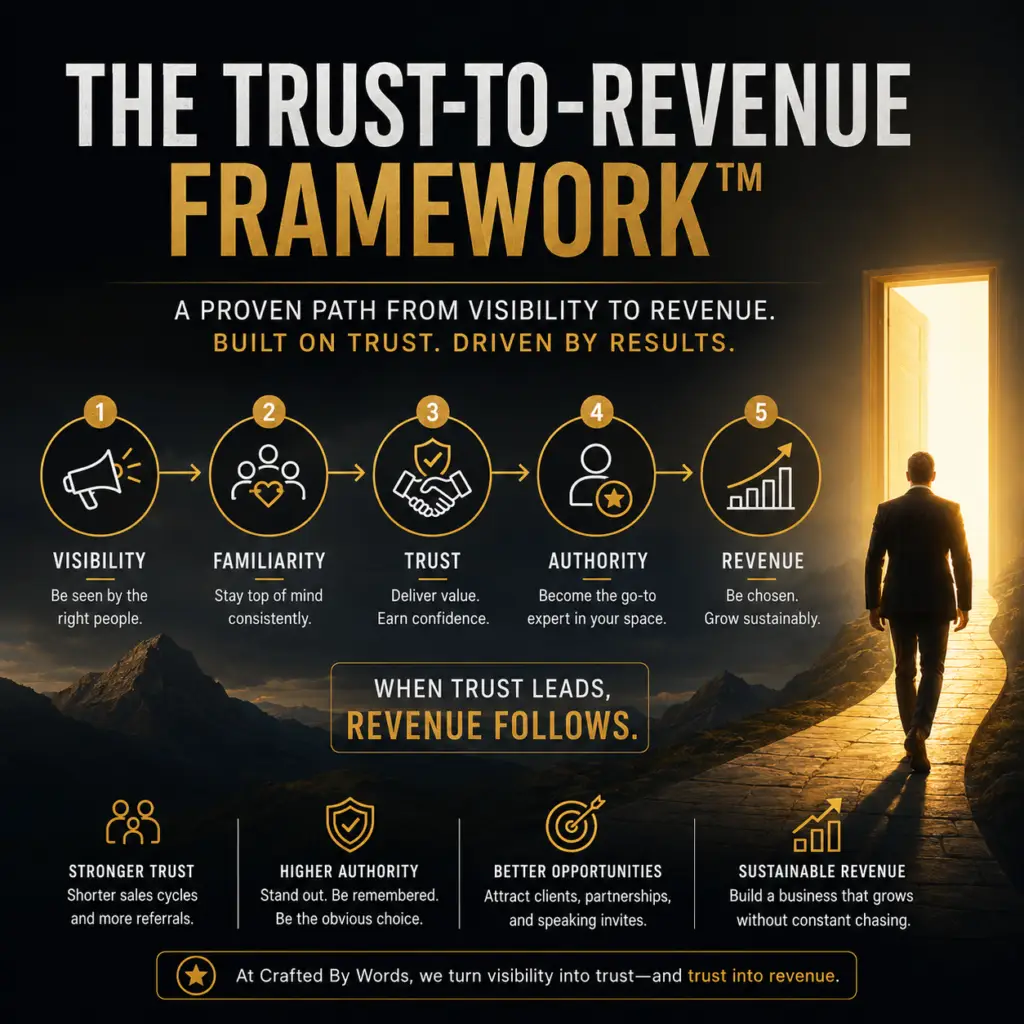
At Crafted By Words, we frame this using the Authority Flywheel™: content creates education, education builds trust, trust increases visibility, and visibility generates opportunities. The value of tracking leading indicators is that it shows you which stage of the flywheel you're actually in, so you're not guessing whether it's working.
The Bottom Line on Personal Branding ROI.
Personal branding is not a guarantee. It's also not a gamble if you approach it correctly. The founders who get results treat it like any other growth channel: they set a baseline, run a defined test, track leading indicators, and make a decision based on data instead of feelings.
Before you spend a year on content with no clear answer, spend 90 days validating the direction. That's enough time to know if it's worth building further, without risking months of effort on a guess.
You don't need faith to build a personal brand. You need a short test, a spreadsheet, and the discipline to look at the numbers honestly.